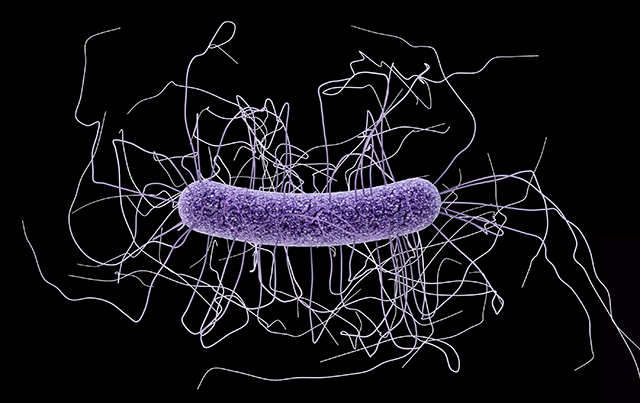
An increasingly common bacterial infection of the gut that could affect you or someone you love.
Imagine your digestive system as a bustling city full of residents who have jobs that keep the city functioning. These “residents” are trillions of bacteria who cohabitate and make up your gut microbiome. They help digest food, make essential vitamins, support your immune system, and even influence your mood. But what happens when something throws this carefully balanced city into chaos?
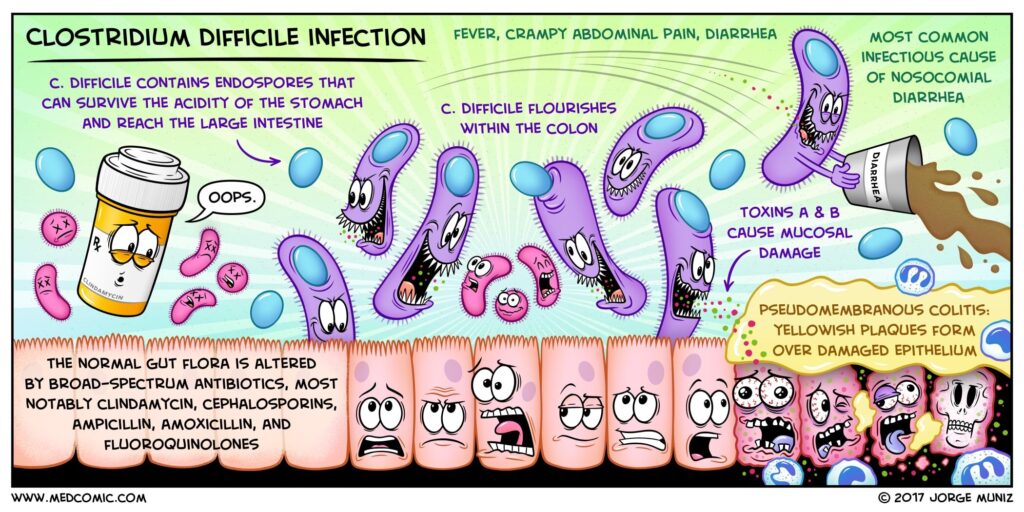
This is known as dysbiosis, an imbalance between good and bad bacteria in the gut. One dangerous culprit: Clostridioides difficile, better known as C. diff, can cause a bacterial infection that can turn a healthy gut into a battleground. It often strikes when the gut is already vulnerable, like after someone takes antibiotics. While antibiotics are essential for fighting harmful bacteria, they can also wipe out good bacteria in the process. This creates an opening for C. diff to move in and take over like a gang seizing power in a city with no police.
The method to madness
Let’s take a closer look at how C. diff turns a peaceful, productive gut into a disaster zone.
Picture your gut lining as a mask that you wore during the Covid-19 pandemic. It allows nutrients (or air) to flow smoothly into the body but blocks harmful pathogens from entrance. Now imagine you were not wearing your mask properly, decreasing security at the entrance. When C.diff senses this environment with little competition (after antibiotics have cleared the way), it has the room and resources to start multiplying rapidly and producing two powerful toxins: Toxin A and Toxin B.
These toxins are like biochemical grenades. They blow holes in the gut lining by turning off proteins that normally keep things sealed and safe. How is this done? By adding a sugar molecule and changing the structure. Because eating sugar isn’t bad enough, now the sugar your body makes can be used against you! This destruction causes the gut to leak fluids, which results in watery diarrhea, the hallmark symptom of C. diff infection. It’s your body’s desperate attempt to flush the invader out.
But it doesn’t stop there.
The toxins also sound the alarm to your immune system. Our bodies have receptors that can sense the presence of toxins and send a fleet of protectors in their direction. White blood cells rush in to fight the invader, but in the process, they cause inflammation. This is like when a fire starts in an apartment building, and they start letting off fire sprinklers in every room. This response, while meant to protect you, can make things worse and cause unmanageable flooding. The gut becomes swollen, irritated, and more damaged. You start to feel cramping, fever, and exhaustion. The gut that once nourished and protected you becomes a battlefield of destruction.
In the worst cases, this damage becomes so severe that parts of the intestine shut down. If the swelling spreads too far or bacteria escape into the bloodstream, it can trigger a life-threatening chain reaction called sepsis, where the body’s immune system goes into overdrive and starts harming its own organs.
Why this Matters
C. diff isn’t just a hospital problem. It’s increasingly appearing in the community, affecting otherwise healthy people. In the United States alone, the Centers for Disease Control and Prevention (CDC) estimates nearly half a million C. diff infections occur each year, and about one in six people will get infected again within 2–8 weeks.
What makes C. diff even trickier is that its spores, the nontoxic form of the bacteria, can survive on surfaces for months. They’re like tiny time bombs, waiting for the right moment to reactivate. On top of this, many cleaning agents can’t kill them, so thorough hygiene and disinfection are crucial in preventing the spread.
Restoring the Gut: Hope and Healing
The good news? Our understanding of gut health is improving, and so are the treatment options. Mild cases of C. diff may respond to targeted antibiotics like vancomycin or fidaxomicin, which are more selective and less disruptive to the gut microbiome.
For recurring infections, doctors are turning to a powerful new therapy: fecal microbiota transplantation (FMT). Yes, it sounds strange—but it works. FMT involves transferring healthy gut bacteria from a donor into the patient’s colon, helping to restore balance and push out the C. diff. In clinical trials, FMT has been shown to cure up to 90% of recurring infections.
Why I Built This Website
This website was created to help you make sense of the science and stories behind C. diff infections, the gut microbiome, and why they are important.
C. diff is more than just a bug. It’s a wake-up call about how critical gut health really is. My goal is to share understandable, trustworthy, and up-to-date information that empowers you to make smart choices, for yourself and your loved ones, but also allows you to understand what is happening in and around you.
Let’s take care of our guts, they’re doing more for us than we ever imagined.
And nobody wants a leaky gut.
Feel free to leave your comments or questions down below and I will be sure to respond to them!