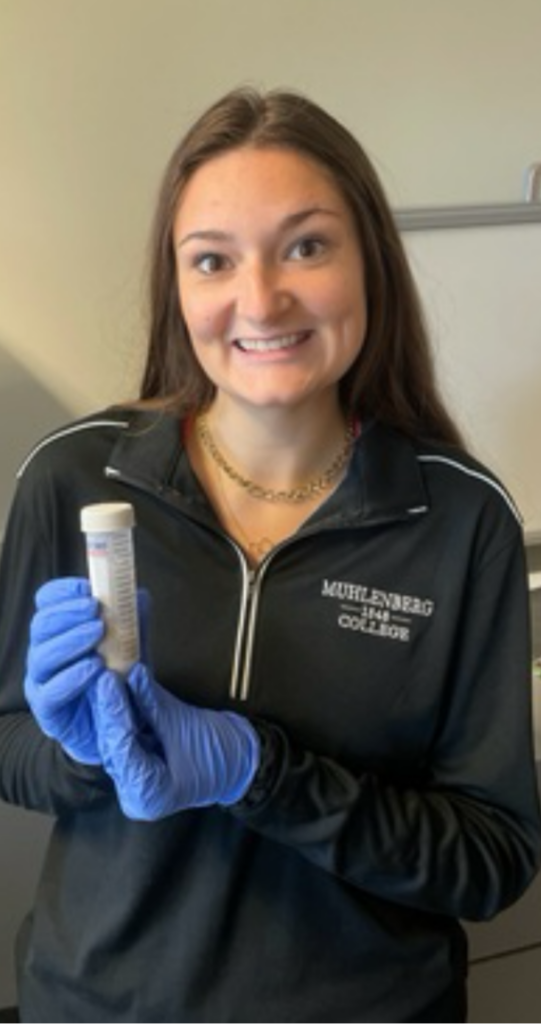
Hello, my name is Regan Bunting, and I am a senior biochemistry and secondary education student at Muhlenberg College in Allentown, PA. I am excited to begin my professional and scientific journey as a post-graduate student beginning May of 2025. I plan to teach middle/high school level science before returning to school myself to study Microbiology as this field has personal affected my health. I love to learn and cannot wait to share this passion with the next generation of scientists.

C. difficile Infection: The Biochemistry

Regan Bunting, Muhlenberg College

6 responses to “Clostridioides Difficile”

  1. Kerrie Jones Avatar
    Kerrie Jones

    Thank you for this information. Doctors are too quick to throw antibiotics at an issue. Great work.

    1. admin Avatar

      I completely agree with this opinion and believe this can be said about a lot of different medications and the medical industry in general. Unfortunately, you are right, doctors frequently overprescribe antibiotics, a practice that has been directly linked to increased rates of Clostridioides difficile infections. The Centers for Disease Control and Prevention (CDC) estimates that about 30% of all outpatient antibiotic prescriptions in the U.S. are unnecessary, especially those written for viral infections like colds and the flu, which do not respond to antibiotics. In hospitals, up to 50% of antibiotic use is deemed inappropriate, whether due to incorrect drug choice, dosage, or duration. This overuse disrupts the gut microbiota by killing off beneficial bacteria, which normally help suppress the growth of harmful pathogens. When this microbial balance is disturbed, C. diff spores can germinate and multiply, leading to infection. Broad-spectrum antibiotics such as clindamycin, cephalosporins, fluoroquinolones, and penicillins are particularly associated with triggering C. diff infections. Each year, nearly 500,000 people in the U.S. contract C. diff, resulting in approximately 29,000 deaths, with older adults and hospitalized patients at the greatest risk. Studies have shown that hospitals with higher rates of antibiotic use experience significantly more C. diff infections. This is not a coincidence!!! In response, antibiotic stewardship programs, physician education, and public awareness campaigns have been developed to reduce unnecessary prescriptions and, in turn, lower infection rates. I believe that reducing inappropriate antibiotic use is one of the most effective ways to prevent C. diff and protect patient health. Check out this link for more about the practice of antibiotic stewardship. https://www.cdc.gov/antibiotic-use/hcp/data-research/stewardship-report.html?CDC_AAref_Val=https://www.cdc.gov/antibiotic-use/stewardship-report/

  2. Dana Schloesser Avatar
    Dana Schloesser

    How does this relate to the recent findings of increased colorectal cancers in adults under 40? I know these are attributed to E Coli toxins with genotoxic effects – but with disruption of the gut microbe could C diff also be contributing to this? Or make one more susceptible?
    Thanks for this great resource!

    1. admin Avatar

      This is an interesting question for me because my initial C.diff infection was compounded by an additional E. coli infection. I always wondered if one came first, making way for the other, or if they came from the same source.
      Based on my research, C. diff causes inflammation and damages the intestinal lining through its toxins, weakening the gut barrier and potentially amplifying the effects of carcinogenic bacteria. Repeated infections and antibiotic treatments also reduce microbial diversity, eliminating protective bacteria like Faecalibacterium prausnitzii and allowing pathogenic species to thrive (Hryckowian et al., 2018). This dysbiosis may support colonization by E. coli and Fusobacterium nucleatum, both linked to CRC.
      Although no direct evidence yet ties C. diff to colorectal cancer in humans, its indirect role; through inflammation, microbiome disruption, and barrier dysfunction, as you suggest, could in my opinion contribute to a cancer-prone gut environment, particularly in younger adults with repeated antibiotic exposure.

      Hryckowian, A. J., Pruss, K. M., & Sonnenburg, J. L. (2018). Nature Microbiology, 3(6), 662–669. https://doi.org/10.1038/s41564-018-0150-6

      Pleguezuelos-Manzano, C., et al. (2020). Nature, 580(7802), 269–273. https://doi.org/10.1038/s41586-020-2080-8

  3. Anne Marie Jones Avatar
    Anne Marie Jones

    Very well written. This explains the issue in easy to understand for the non scientific person who may be dealing with this problem.

  4. Jon Cohen Avatar
    Jon Cohen

    Hi Regan! It is so tragically fascinating how C. diff takes over the gut microbiome. The Mucosal Vaccination sounds like a promising treatment. Would you be able to explain how it works, and how it differs from an antibiotic?

Leave a Reply

Your email address will not be published. Required fields are marked *